
Vietnam Travel Guide
Cu Chi Tunnels – Top 7 Amazing Destination in Southeast Asia
Jul
Embark on an unforgettable Saigon tour and discover the extraordinary Cu Chi Tunnels, a hidden gem and one of the top 7 must-see destinations in Southeast Asia. Nestled beneath the vibrant cityscape of Ho Chi Minh City, these tunnels offer a captivating glimpse into Vietnam’s rich history and the resilient spirit of its people. Journey through this intricate underground network and experience firsthand the remarkable ingenuity and endurance that characterized the Vietnam War era.
An Overview of Cu Chi Tunnels
The Cu Chi Tunnels are an extensive network of underground passages situated in the Cu Chi district of Ho Chi Minh City, Vietnam. Spanning over 250 kilometers, these tunnels are a testament to both the remarkable engineering prowess and the indomitable spirit of the Vietnamese people.
During the Vietnam War, the tunnels played a crucial role as a strategic base for the Viet Cong, allowing them to conduct guerrilla warfare, transport supplies, and evade enemy forces. The tunnels’ sophisticated design included living quarters, kitchens, hospitals, and weapon factories, showcasing the resilience and ingenuity that defined the Vietnamese resistance.
Today, the Cu Chi Tunnels stand as a poignant historical site, offering insight into the hardships and strategies of the war while symbolizing the enduring strength of the Vietnamese people.
The History of Cu Chi Tunnels
The origins of the Cu Chi Tunnels can be traced back to the late 1940s during the First Indochina War, when the Vietnamese were fighting against French colonial rule. Initially, these rudimentary tunnels were constructed by the Viet Minh, the predecessor of the Viet Cong, as a means to evade French patrols, transport supplies, and coordinate activities in the fight for independence. These early tunnels were relatively short and simple, serving primarily as hideouts and escape routes.
The significance and complexity of the Cu Chi Tunnels increased dramatically during the Vietnam War. In the 1960s, as the conflict with American and South Vietnamese forces intensified, the Viet Cong embarked on an ambitious expansion of the tunnel network. The goal was to create a vast, interlinked system that could support extensive guerrilla operations and sustain prolonged periods of conflict.
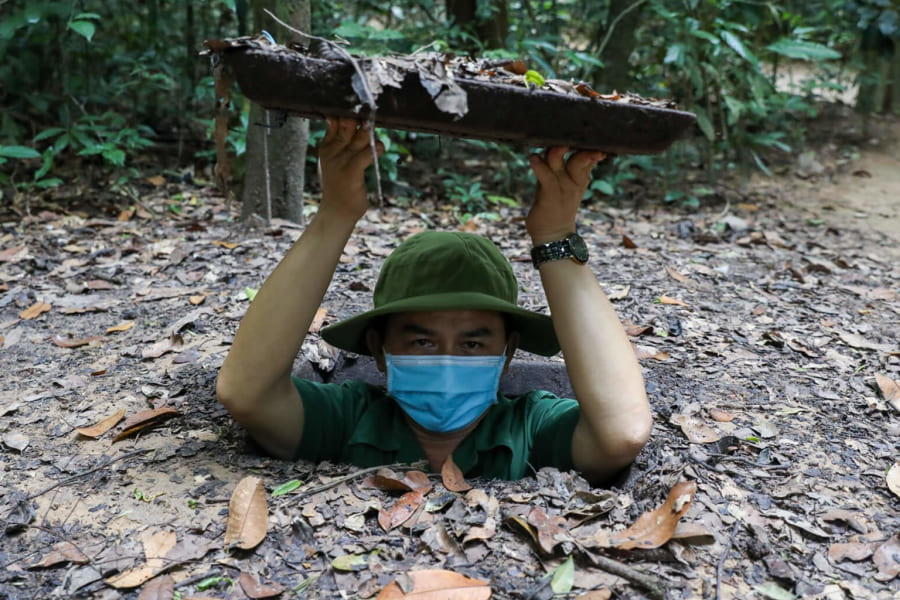
The expanded tunnel system reached its peak in the mid-1960s, stretching over 250 kilometers and extending to the Cambodian border. The tunnels were deepened and fortified to withstand bombings and ground attacks. Entrances were cleverly concealed, often located in dense jungle or beneath fake anthills, making them nearly invisible to enemy troops.
After the end of the Vietnam War in 1975, the Cu Chi Tunnels were largely abandoned. However, their historical significance was soon recognized, and efforts were made to preserve sections of the tunnel network. Today, the Cu Chi Tunnels are a popular tourist attraction and a poignant war memorial. Visitors can explore the tunnels, view exhibits of wartime artifacts, and learn about the strategies and hardships endured by the Viet Cong soldiers.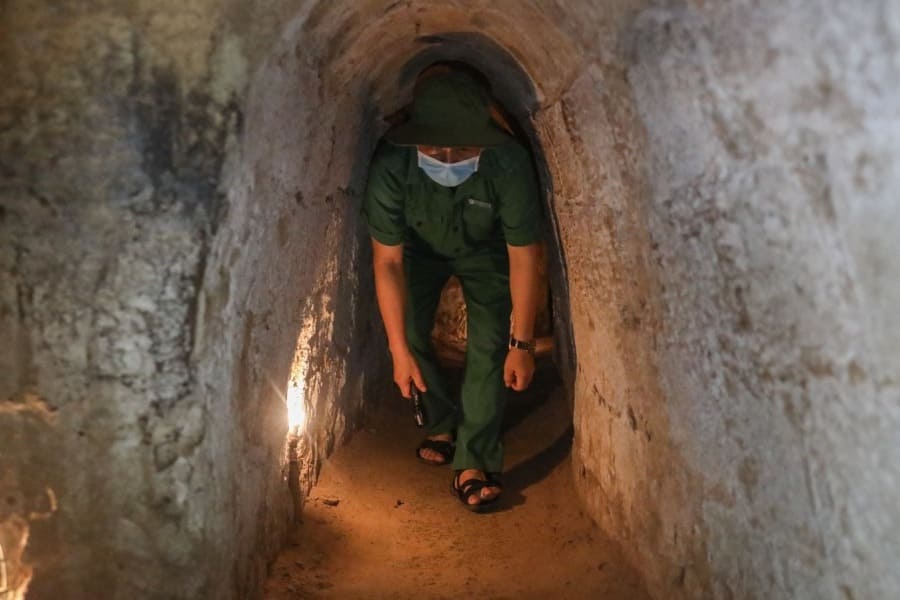
The Construction and Architecture of Cu Chi Tunnels
The Cu Chi Tunnels featured multiple levels, with the deepest reaching up to 10 meters below ground. The tunnels included various chambers serving different functions:
- Living Quarters: Provided shelter for the Viet Cong soldiers.
- Kitchens (Hoang Cam Stoves): Designed to diffuse smoke through multiple chambers, minimizing the risk of detection.
- Hospitals and Medical Facilities: Equipped to treat wounded soldiers.
- Armories and Factories: Used for manufacturing and storing weapons and explosives.
- Command Centers: Enabled strategic planning and coordination of military operations.
The tunnel system also incorporated numerous defensive features such as booby traps, false tunnels, and dead-end passages to confuse and deter enemy forces.
The Cu Chi Tunnels played a crucial role in the Viet Cong’s guerrilla warfare strategy. They allowed fighters to:
- Launch Surprise Attacks: Emerging unexpectedly to ambush enemy troops.
- Evade Detection: Disappearing quickly after an assault to avoid capture.
- Transport Supplies: Moving food, weapons, and personnel safely.
- Communicate: Maintaining lines of communication across different regions controlled by the Viet Cong.
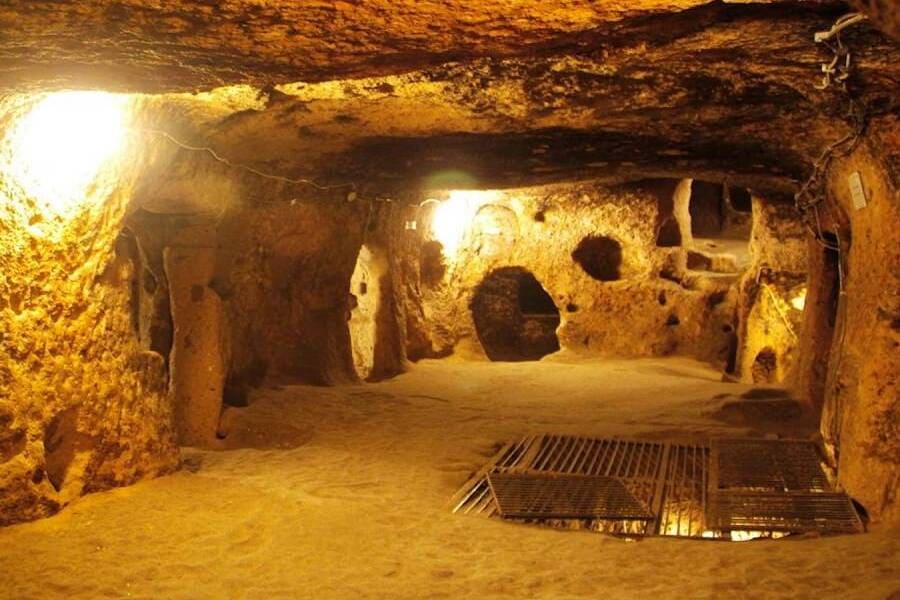
Experience the Life in Cu Chi Tunnels
Life in the Cu Chi Tunnels during the Vietnam War was a testament to human resilience and ingenuity in the face of extreme adversity. The conditions within the tunnels were harsh and unforgiving; the narrow, claustrophobic passages were hot, humid, and teeming with insects and rodents.
Despite these challenges, the Viet Cong managed to create a functional subterranean society. Soldiers and civilians lived side by side, with designated areas for sleeping, cooking, and medical care. The lack of natural light and fresh air, coupled with the constant threat of discovery and attack, made life in the tunnels a grueling experience. Cooking smoke was carefully ventilated to avoid detection, and elaborate booby traps were set to protect against enemy intrusion. Communication and supply lines were maintained through this network, allowing for coordinated guerrilla attacks and the transport of essential resources.
Despite the constant danger and discomfort, the Viet Cong’s ability to adapt and persevere in such dire conditions underscores their determination and resourcefulness during the war.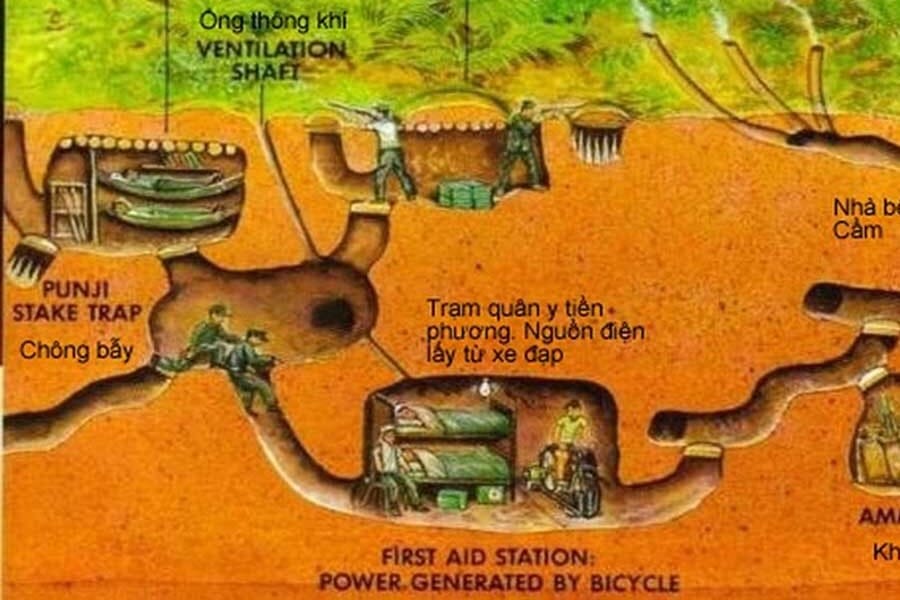
Cu Chi Tunnels Tour Guide
Opening hour
Cu Chi Tunnels opens daily from 7:00 am – 17:00 pm
Entrance fee
The entrance fee for the Cu Chi Tunnels tourist area ranges from 20,000 to 30,000 VND per person.
The fee for crawling through the tunnels is 20,000 VND per person, and the cost for participating in various games is 50,000 VND per person.
How to get to Cu Chi Tunnels
The Cu Chi Tunnels are located about 70 kilometers northwest of Ho Chi Minh City. To get there by car or motorbike, follow these directions:
- Start from Ho Chi Minh City: Head northwest on Nguyen Thi Minh Khai Street.
- Continue on National Highway 22: Follow this highway out of the city towards Cu Chi.
- Turn onto Provincial Road 15: Follow the signs directing you to the Cu Chi Tunnels.
In addition, visitors can travel to Cu Chi Tunnels by bus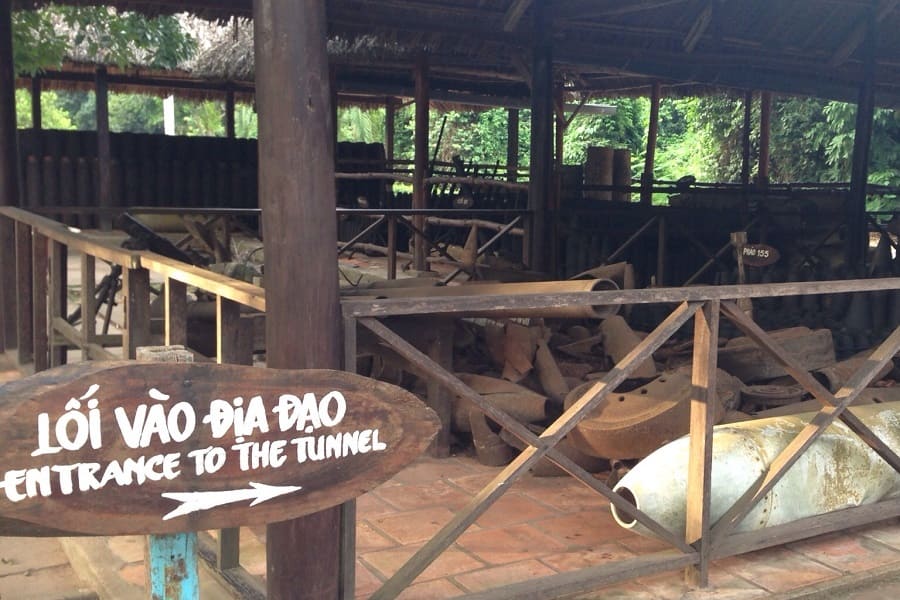
By Tour Bus
The most convenient way to visit the Cu Chi Tunnels is by joining a guided tour. Many tour operators in Ho Chi Minh City offer half-day or full-day tours that include round-trip transportation, entrance fees, and a guided tour of the tunnels. These tours typically provide hotel pickup and drop-off, making it a hassle-free option.
By Public Bus
For those on a budget, taking a public bus is an economical option. From the Ben Thanh Bus Station in District 1, you can take Bus #13 to Cu Chi Bus Station. From there, transfer to Bus #79, which will take you directly to the Cu Chi Tunnels. The total journey can take about 2-3 hours depending on traffic.
The Cu Chi Tunnels stand as a remarkable testament to human ingenuity, resilience, and the indomitable spirit of the Vietnamese people. This extensive underground network not only played a crucial role during the Vietnam War but also now serves as an educational and poignant historical site. Visiting the Cu Chi Tunnels offers a unique glimpse into the hardships and strategies of wartime, providing a profound appreciation for the sacrifices made and the innovative tactics employed. As a symbol of perseverance and resourcefulness, the Cu Chi Tunnels remain a significant and compelling destination for anyone seeking to understand the complex history of Vietnam.


