
Vietnam Travel Guide
Vinh Nghiem Pagoda – A Must-visit Spiritual Destination In Saigon
Jul
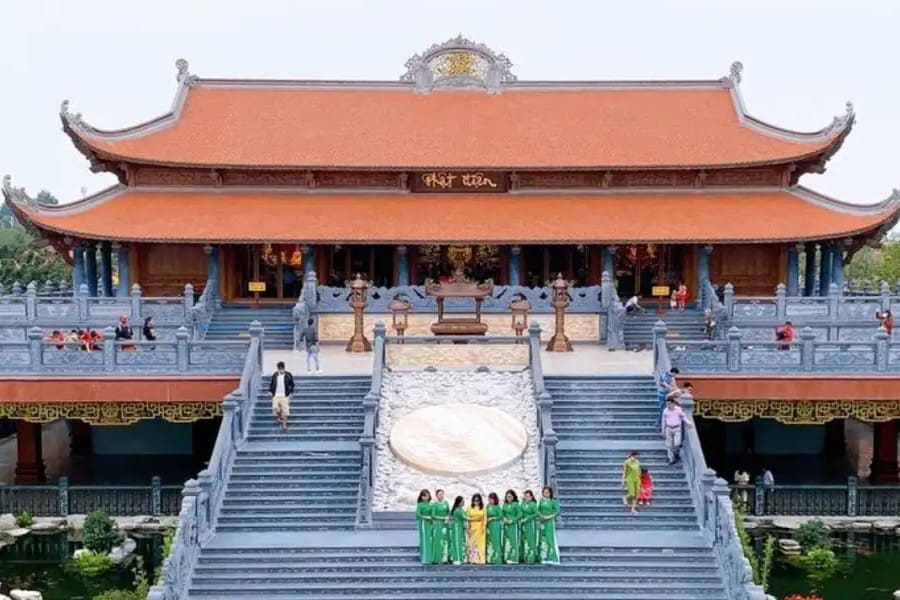
Vinh Nghiem Pagoda is a renowned Buddhist landmark known for its impressive architecture and spiritual significance. Constructed in the 20th century, the pagoda showcases traditional Northern Vietnamese architectural styles, blending ancient design with modern construction techniques. Its sprawling grounds encompass various structures including the Tam Quan gate, central buildings, and iconic towers like the Quan The Am Tower, which stands nearly 40 meters tall with seven stories. Besides its architectural marvels, Vinh Nghiem Pagoda is a center for Buddhist practices, meditation retreats, and charitable activities, making it a cultural and spiritual hub that attracts visitors seeking tranquility and cultural immersion.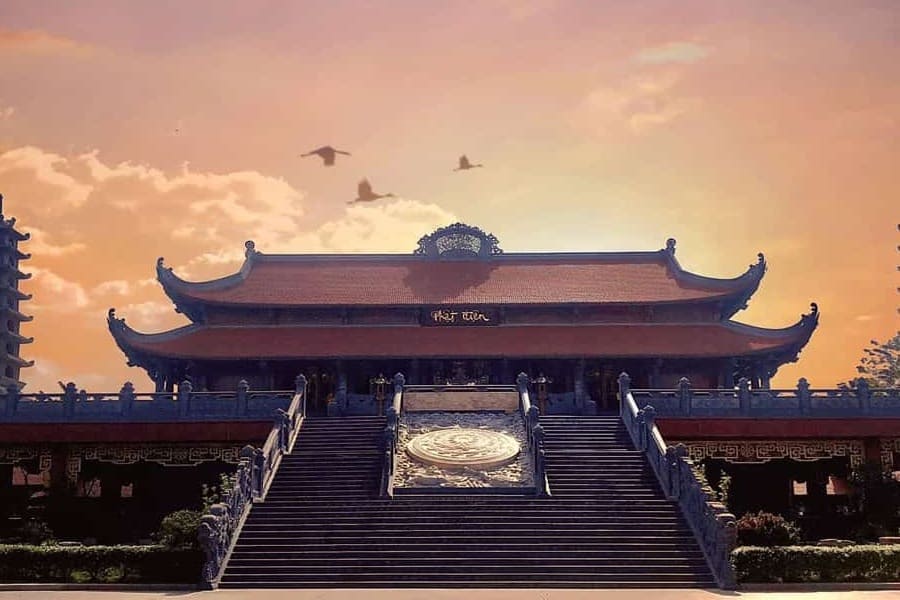
The History of Vinh Nghiem Pagoda
The history of Vinh Nghiem Pagoda in Ho Chi Minh City dates back to 1964 when it was initiated by two monks from the North, Thích Tâm Giác and Thích Thanh Kiểm, who came to the South to propagate Buddhism. Inspired by a wooden pagoda of the same name in Đức La village, Yên Dũng district, Bắc Giang province, originally established during the reign of King Lý Thái Tổ as a center for spreading Buddhism of the Trúc Lâm Zen sect.
Architect Nguyen Bá Lăng designed the structure with collaboration from Lê Tấn Chuyên and Cổ Văn Hậu. Construction began on low-lying land near the Thị Nghè canal, requiring the transfer of approximately 40,000 cubic meters of soil from Biên Hòa Boulevard to fill the site. The construction cost was around 98 million dong at that time, with the main grounds provided by the government of the Republic of Vietnam (South Vietnam). By 1971, Vinh Nghiem Pagoda was essentially completed, featuring the central building (housing a Buddha hall on the upper floor), the Quán Thế Âm Tower, and facilities for social activities. Subsequently, additional structures were added, including the Xá Lợi Community Tower, Vinh Nghiem Stone Tower, ceremonial pathways, and guest halls, further expanding the pagoda’s facilities and significance.
The Architecture of Vinh Nghiem Pagoda
Vinh Nghiem Pagoda, located near Nam Kỳ Khởi Nghĩa street in Ho Chi Minh City, occupies a spacious 6,000 square meter area. Its architecture blends traditional Northern Vietnamese style with modern construction techniques and materials, making it a prominent example of 20th-century Vietnamese Buddhist architecture.
The complex includes three main sections: the Tam Quan (Three Gateways), central buildings, and towers
Tam Quan
This is a rather grand structure, designed in traditional style with gracefully curved red-tiled roofs. In 2005, as part of the city’s expansion project along Nam Kỳ Khởi Nghĩa Street, the Tam quan gate of the pagoda was moved indoors to its present location..
The Central Building
The central building, a large two-story structure, houses the main hall, lecture halls, offices, libraries, and classrooms for Buddhist studies. It is accessible via three wide staircases leading to an upper terrace, Buddha hall, and the Quán Thế Âm Tower.
The Buddha hall, designed in a cruciform style with curved Northern Vietnamese roofs adorned with phoenix motifs, spans 35 meters in length and 22 meters in width. It houses the main altar dedicated to Shakyamuni Buddha, flanked by statues of Bodhisattvas and paintings of Arhats along the walls. Intricate wood carvings depict scenes from renowned temples across Vietnam and Asia.
Towers in Vinh Nghiem Pagoda
Vinh Nghiem Pagoda features several distinctive towers that contribute to its architectural splendor.
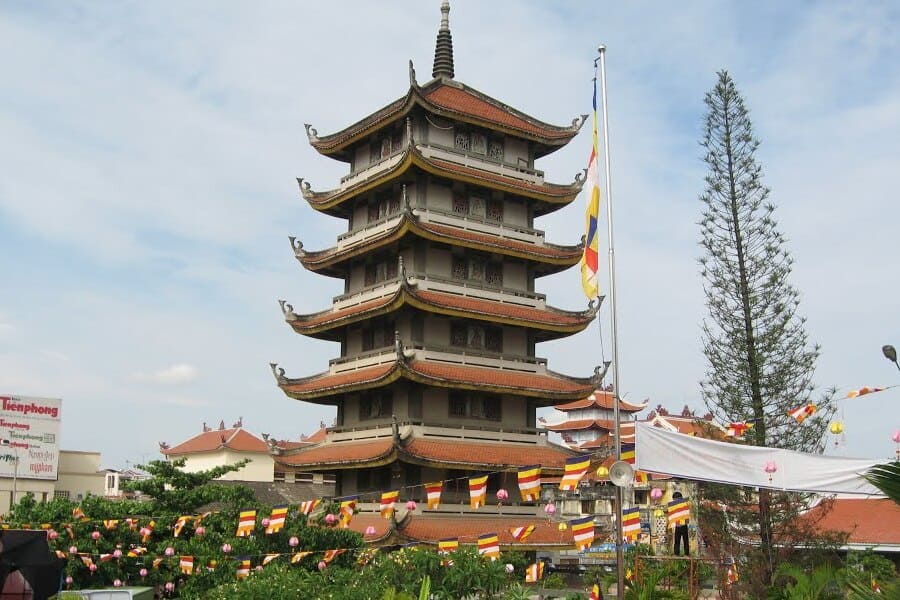
The Quán Thế Âm Tower, situated to the left of the main Buddha hall when viewed from the entrance, stands seven stories tall, nearly 40 meters high. It was constructed concurrently with the pagoda and has a square shape with each side of the base measuring 6 meters. At its peak, the tower is adorned with nine circular wheels and various round blocks known as Long xa and Quy châu, making it one of the most majestic pagoda towers in Vietnamese Buddhism.
Behind the main Buddha hall, to the left when facing inward, is the Xá Lợi Community Tower. This four-story tower, completed in 1984 after construction began in 1982, is notable for its unique design featuring staircases leading up from the courtyard. It serves as a repository for the remains of past revered Buddhist practitioners, offering a place for their families and followers to pay homage.
Additionally, the Vinh Nghiem Stone Tower, located just beyond the main entrance to the right, was inaugurated in December 2003. Rising 14 meters high, this stone tower is dedicated to the venerable Đại lão Hoà thượng Thích Thanh Kiểm, one of the two venerable monks instrumental in founding the pagoda. It is considered the first and largest stone tower in Southern Vietnam, adding to the pagoda’s architectural distinction.
Within the pagoda grounds, there is also the Phương trượng area, nestled in the innermost part. It comprises L-shaped buildings surrounding a lotus pond, providing a tranquil retreat for visitors and monks alike, along with a series of structures used as dormitories and study rooms for monks.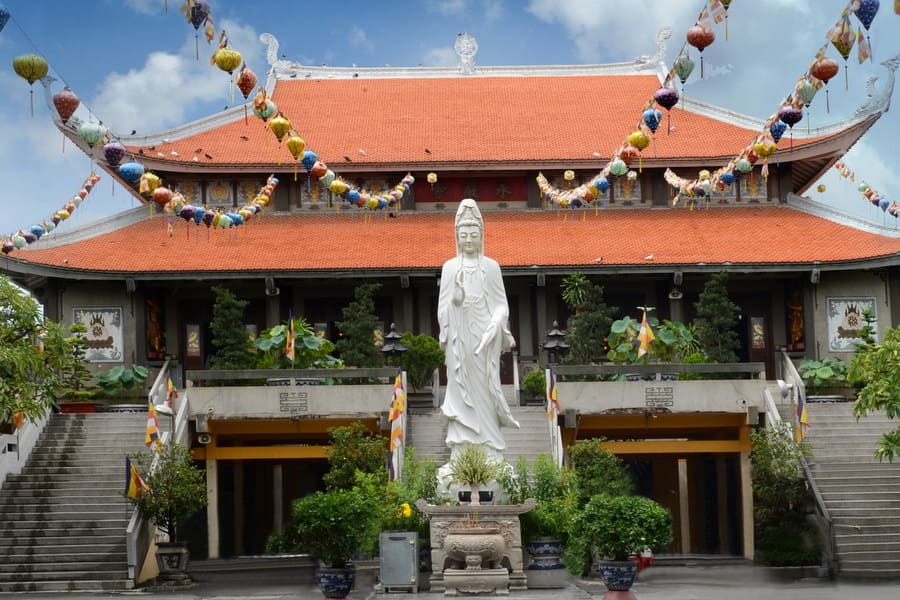
What to do at Vinh Nghiem Pagoda?
In addition to Buddhist rituals, seeking peace, and architectural exploration, visitors to Vinh Nghiem Pagoda also have the opportunity to participate in retreats and various volunteer activities. These meaningful activities are regularly organized by the pagoda to engage with the community and include:
- Charity Cooking: Visitors can participate in preparing hundreds of charity meals to serve the underprivileged and homeless in Saigon.
- Zero Dong Supermarket: The pagoda regularly distributes essential items through a “Zero Dong Supermarket” to support those in need, including rice, instant noodles, cooking oil, and soy sauce.
- Three Jewels Initiation Ceremony: This important Buddhist ritual formalizes individuals as Buddhist followers.
- Buddhist Retreats: Visitors can register and join Buddhist retreats to deepen their understanding of Buddhist teachings through meaningful Dharma talks by venerable monks.
- Blood Donation: Supported by the abbots and monks of Vinh Nghiem Pagoda, visitors and Buddhist followers can participate in blood donation drives for humanitarian purposes and to accumulate merit.
- Tet Gift Giving: During Tet (Vietnamese Lunar New Year), the pagoda organizes gift-giving activities for local disadvantaged people. Visitors can contribute and join the pagoda in spreading warmth and joy during Tet.
- These activities not only offer cultural insights and spiritual experiences but also provide opportunities for visitors to contribute to charitable causes and community welfare initiatives at Vinh Nghiem Pagoda.
Vinh Nghiem Pagoda Tour Guide
Opening hour
Vinh Nghiem opens from 6:00 am – 19:00 pm, from Monday to Saturday and from 6:00 am- 23:00 pm on Sunday
Entrance fee
Free
The best time to visit Vinh Nghiem Pagoda
The best time to visit Vinh Nghiem Pagoda is during the early morning hours or late afternoon to evening. This allows you to explore the pagoda in a peaceful atmosphere with fewer crowds, and also experience the serene ambiance for meditation or quiet contemplation. Additionally, visiting during weekdays outside of peak tourist hours can enhance your experience, allowing you to fully appreciate the architectural beauty and spiritual essence of the pagoda.
How to get to Vinh Nghiem Pagoda?
Address: Vinh Nghiem Pagoda is located at 339 Nam Ky Khoi Nghia Street, Ward 7, District 3, Ho Chi Minh City, Vietnam.
To get to Vinh Nghiem Pagoda in Ho Chi Minh City, you can follow these directions:
- By Taxi/Grab: The most convenient way is to take a taxi or use the Grab app. Just input the pagoda’s address, and the driver will take you there directly.
- Public Transportation: You can take a bus that stops near Vinh Nghiem Pagoda. Check with locals or your hotel for the best bus routes that pass through District 3.
- Walking: If you are staying nearby in District 3, Vinh Nghiem Pagoda may be within walking distance, depending on your exact location.
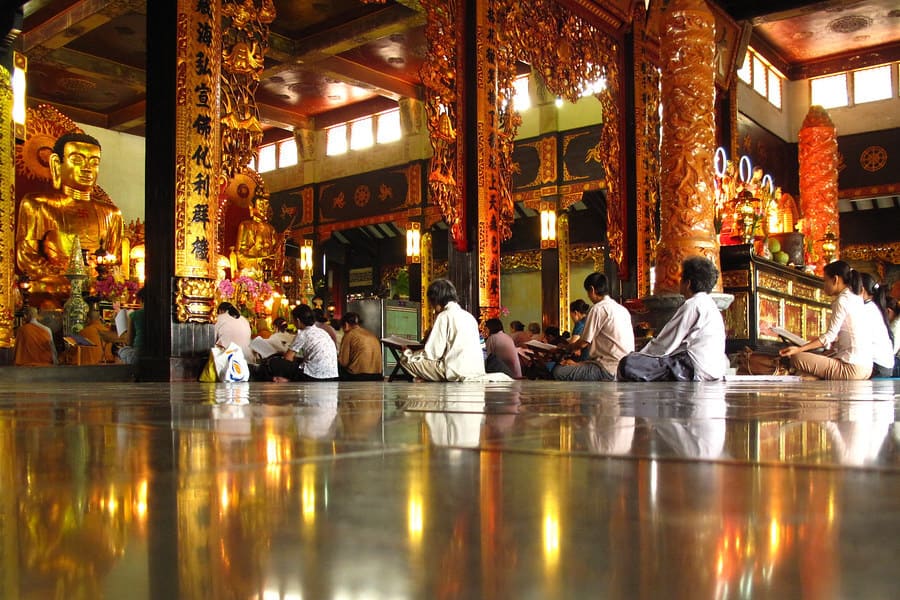 Tips for tourists when visiting Vinh Nghiem Pagoda
When visiting Vinh Nghiem Pagoda in Ho Chi Minh City, here are some tips for tourists:
- Respectful Attire: As with any religious site, dress modestly out of respect. Avoid shorts, sleeveless tops, or revealing clothing. It’s advisable to wear clothing that covers your shoulders and knees.
- Silence and Respect: Maintain a quiet and respectful demeanor within the pagoda grounds. This is a place of worship and meditation for many, so avoid loud conversations or disruptive behavior.
- Shoes Off: Remove your shoes before entering the main pagoda buildings. It’s customary and a sign of respect to leave your shoes outside.
- Offerings and Donations: If you wish to make an offering or donation, there are usually designated areas or boxes for this purpose. Follow any instructions provided by the pagoda staff.
- Guided Tours: Consider joining a guided tour to learn more about the history and significance of Vinh Nghiem Pagoda. Guides can provide insights into the architecture, rituals, and cultural aspects of the pagoda.
- Respectful Behavior: Be mindful of your behavior and interactions with others. The pagoda is a place of reverence, so gestures of respect towards worshippers and monks are appreciated.
- Local Customs: Learn a bit about Buddhist customs and practices beforehand to better appreciate your visit. Understanding the significance of rituals and symbols can enhance your experience.
- Explore Surroundings: Vinh Nghiem Pagoda is located in District 3, which has other attractions and dining options nearby. Consider exploring the surrounding area to make the most of your visit.


