
Vietnam Travel Guide
Buu Long Pagoda – The Most Unique Thai-style Architecture In Saigon

Jul
Buu Long Pagoda is renowned for its unique Thai-Lan architectural style. Nestled amidst lush greenery and tranquil surroundings, the pagoda offers visitors a serene retreat from the hustle and bustle of city life. Its distinctive golden spires and intricate carvings reflect both Thai architectural influences and traditional Vietnamese cultural elements. Buu Long Pagoda is not only a spiritual sanctuary but also a place where visitors can admire stunning religious architecture and immerse themselves in a peaceful atmosphere conducive to meditation and contemplation.
An Overview of Buu Long Pagoda
Buu Long Pagoda, formally known as Buu Long Zen Monastery, is situated on a hillside by the Dong Nai River at 81 Nguyen Xien Street, Long Binh Ward, Thu Duc City, Ho Chi Minh City. Founded in 1942 by monk Vo Ha Thuat, the pagoda belongs to the original Southern School of Buddhism. In 2007, significant investments were made for its construction and renovation.
The Outstanding Architecture of Buu Long Pagoda
Buu Long Pagoda blends architectural styles from Thai, Indian temples, and Nguyen dynasty architecture.
The Unique garden design of Buu Long Pagoda
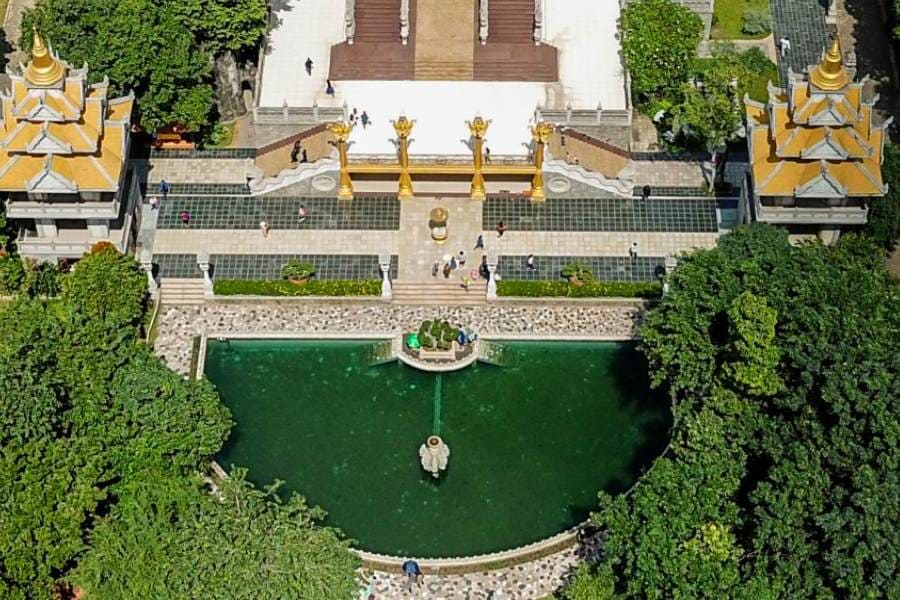
Buu Long Pagoda features a unique garden design that offers a tranquil escape from the hustle and bustle of Saigon. Spread across 11 hectares, the grounds are adorned with lush greenery, creating a serene and peaceful atmosphere. Tall, straight trees line the pathways, adding an air of grandeur to the temple’s surroundings. At the heart of the grounds lies a large emerald-green lake, intricately bordered by ornate pathways. Adding to its charm is a gentle hill to the west, overlooking the majestic Dong Nai River branch.
Upon entering the pagoda’s grounds, visitors immediately feel a sense of calm and serenity. The expansive area, filled with verdant trees, not only provides shade and coolness but also exudes a sense of elegance. In the center, guests can admire the distinctive architecture surrounding the large lake, beautifully adorned with intricate, artistic pathways.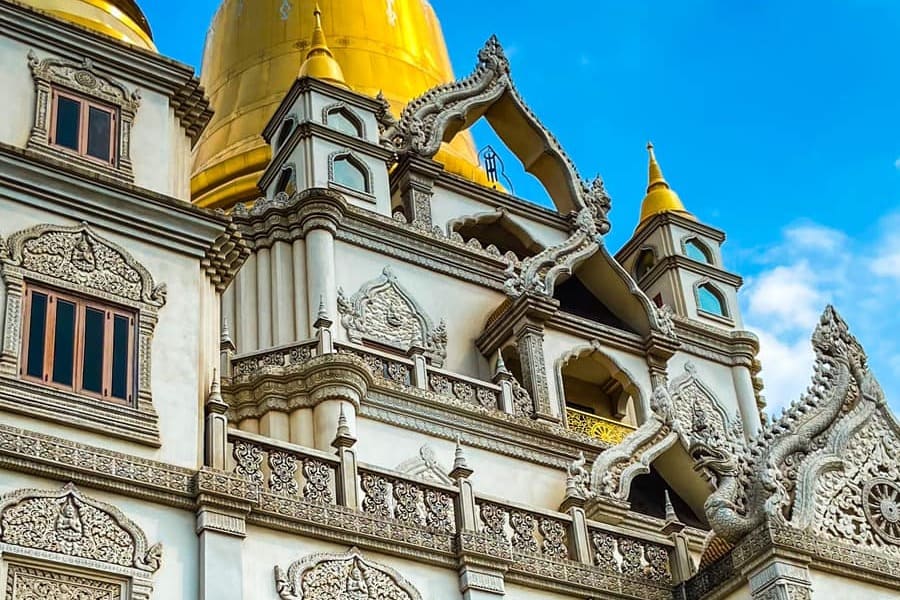
The Gotama Cetiya Stupa
Its centerpiece is the Gotama Cetiya stupa, completed in 2013 after 6 years of construction. This monumental stupa, dedicated to the Buddha and revered monks, spans over 2,000 square meters and stands 70 meters tall, reflecting the cultural influence of Funan. Surrounding it are smaller golden towers made of bronze. Buu Long Pagoda boasts Vietnam’s largest stupa complex, featuring a central tower with seven tiers: the ground and second floors serve as halls, the third and fourth floors house meditation rooms, and the fifth floor honors the Buddha and revered monks.
What sets Buu Long apart?
“Thai Temple” in Ho Chi Minh city
Buu Long Pagoda, often called the “Thai Temple” of Ho Chi Minh City, stands out for its distinctive architecture reminiscent of Thailand’s temples. Featuring golden spires and intricate carvings, it showcases meticulous design and craftsmanship. Additionally, the pagoda incorporates Vietnamese cultural elements, such as dragon statues and traditional carvings, blending seamlessly with the original Buddhist influences from India and Nguyen dynasty aesthetics. This unique combination makes Buu Long Pagoda not only a spiritual site but also a top tourist attraction, popular among young visitors for capturing stunning photos.
“Incense- free” temple
Buu Long Pagoda, nestled amidst lush green hills away from the bustling city, exudes tranquility and serenity. Here, visitors can shed their daily worries and find solace in its peaceful ambiance. Known as the “incense-free temple,” it welcomes devotees and tourists alike to pray and meditate without the need for burning incense. This serene sanctuary is a popular destination for pilgrimages, Buddhist rituals, and contemplative meditation, offering a serene escape from life’s hustle and bustle.
Buu Long Pagoda Tour Guide
Opening hour
8:00 am – 18:00 pm
Entrance fee
Free
How to get to Buu Long Pagoda?
By Car or Taxi
The most convenient way is by car or taxi. You can hire a taxi from the city center, and it will take approximately 30-45 minutes depending on traffic conditions.
By Bus:
- Take a public bus heading towards District 9 or Suối Tiên.
- Get off at the stop near Đường Nguyễn Duy Trinh (Nguyễn Duy Trinh Street).
- From there, you can take a taxi or motorbike taxi (xe ôm) to Buu Long Pagoda, which is located on Nguyễn Xiển Street, Phường Long Bình, District 9.
Tips for tourist when visiting Buu Long Pagoda
When visiting Buu Long Pagoda, here are some tips for visitors:
- Dress Appropriately: As a place of worship, dress modestly out of respect. Avoid shorts, sleeveless tops, and revealing clothing.
- Respectful Behavior: Maintain a quiet and respectful demeanor, especially around prayer areas and during ceremonies.
- Photography: Ask for permission before taking photos, especially inside the pagoda or near worshippers.
- Shoes Off: Remove your shoes before entering any pagoda buildings or designated areas.
- Follow Signs and Rules: Observe any signs or instructions posted around the pagoda premises.
- Time Your Visit: Consider visiting early in the morning for a quieter experience and cooler temperatures.
- Explore Surroundings: Enjoy the serene surroundings of Buu Long Pagoda, including the gardens, statues, and scenic lake.
- Respect Cultural Norms: Be mindful of local customs and traditions, such as bowing respectfully when appropriate.
- Stay Hydrated: Carry water, especially during hot weather, as you explore the extensive grounds of Buu Long Pagoda.
Attractions near Buu Long Pagoda for Tourists
Saigon Notre-Dame Cathedral (Nhà Thờ Đức Bà):
- Location: District 1, Ho Chi Minh City.
- A French colonial-era cathedral known for its neo-Romanesque architecture, twin bell towers, and impressive stained glass windows.
Ben Thanh Market (Chợ Bến Thành):
- Location: District 1, Ho Chi Minh City.
- One of the oldest and busiest markets in Saigon, offering a wide range of goods including local handicrafts, textiles, souvenirs, and street food.
Independence Palace (Dinh Độc Lập):
- Location: District 1, Ho Chi Minh City.
- Formerly the presidential palace of South Vietnam, now a museum showcasing historical artifacts, meeting rooms, and a recreation of the war command center.
Dragon House Wharf (Bến Cảng Nhà Rồng):
- Location: District 4, Ho Chi Minh City.
- A historic pier where President Ho Chi Minh departed for France in 1911, now preserved as a museum exhibiting documents and artifacts related to his life and travels.


